Why Hijabs Slip—and What Wholesale Buyers Should Specify Before Sampling
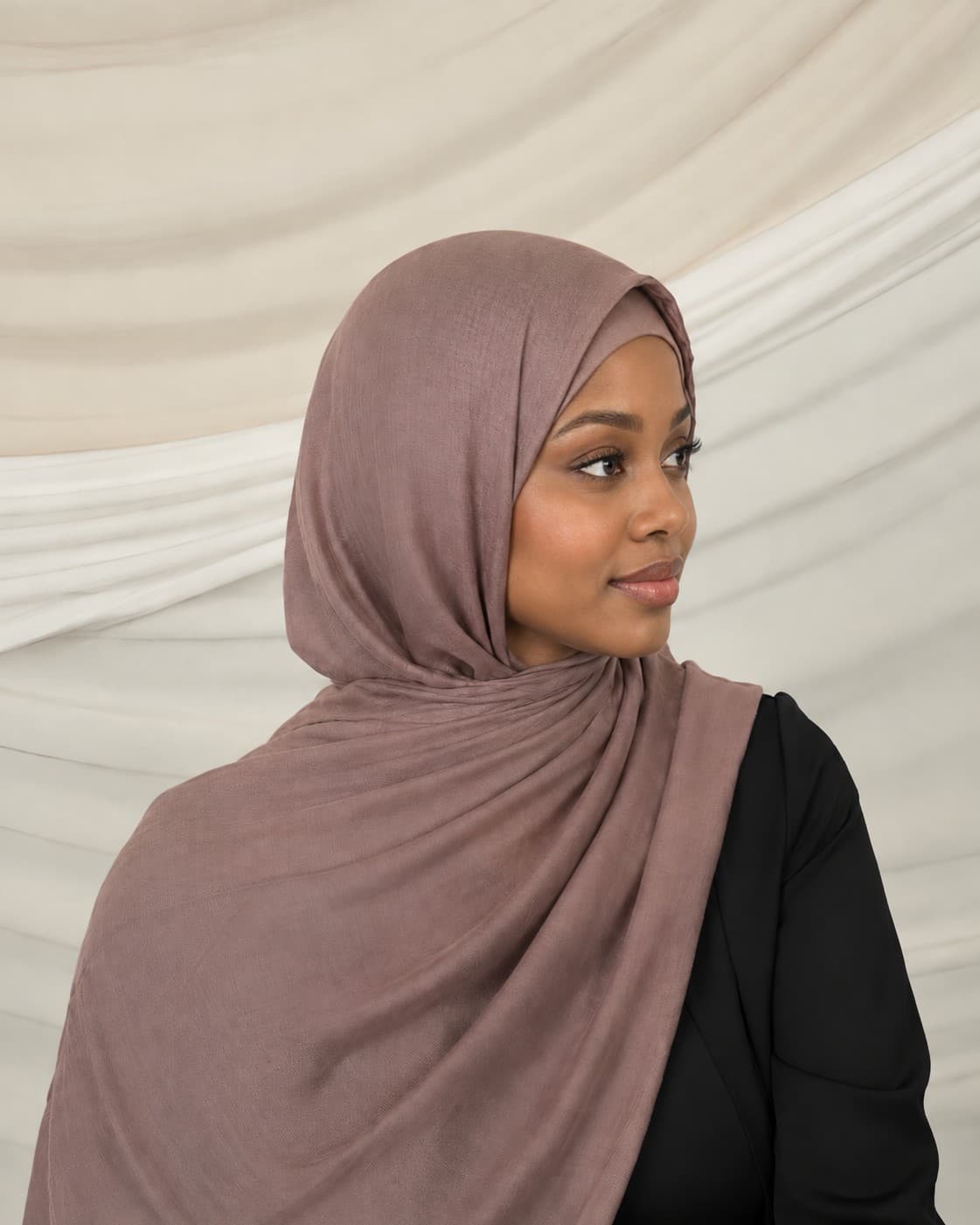
Hijabs slip because stability is a system: fabric surface, weight, dimensions, face-frame geometry, undercap, fastening and wearer movement interact. A wholesale buyer should never specify “non-slip” as a standalone promise. Define the intended styling setup, then compare samples with a repeatable wear protocol.
Slippage is an interaction, not one defect
A smooth chiffon against a smooth undercap may migrate even when both components are individually acceptable. A grippier knit may still move if it is too short for the wrap, too heavy at the tail or stretched unevenly around the face. Hair texture, head shape, pins, magnets and styling technique can further change the outcome.
Public review themes about chiffon slipping are useful for identifying risk, but they do not prove that every chiffon performs the same way. The buyer action is to recreate the intended customer setup and identify where movement begins.
| Observed movement | Possible cause to investigate | Buyer check |
|---|---|---|
| Front edge moves back | Low surface grip, loose face opening or incompatible undercap | Mark the starting position and compare movement after an agreed routine |
| Scarf rotates | Uneven tail weight or asymmetric wrapping | Test dimensions and styling instructions on several wearers |
| Ear/neck coverage opens | Insufficient width, stretch distortion or face geometry | Photograph coverage before and after head movement |
| Pins pull or fabric puckers | Fastening placement or unstable edge | Inspect localized stress and edge recovery |
Specify the complete styling system
Tell the supplier whether the product is designed for an undercap, magnets, pins, a pre-sewn construction or no accessories. If an undercap is part of the retail offer, develop it alongside the scarf. Its circumference, depth, opening, seam placement and surface are part of the performance system.
Do not use a single head measurement as a universal fit conclusion. Define your target-customer fit approach and evaluate more than one suitable wearer or form. Record where the front edge sits, whether ears remain covered as intended, and whether pressure points develop.
Dimensions must be finished dimensions
State length and width as finished measurements and define where and how they are measured. For stretch fabrics, specify that the sample lies relaxed for an agreed conditioning period before measurement. Include tolerances only after discussing manufacturing capability; do not copy arbitrary tolerances from another product.
Length influences styling options and tail balance. Width affects layering, chest coverage and opacity. Consumer questions about modal length show why a nominal fabric category cannot replace a dimensional brief.
Edge construction changes behavior
A rolled, baby, laser-cut or other edge can alter stiffness, curl and drape. Name the requested construction, thread appearance and corner treatment. Inspect whether the edge tunnels, waves or twists after care and whether it feels comfortable at the face.
Use a sample specification that can be answered
Attach drawings or annotated photographs to a numbered specification. Every comment should point to a feature and an approval action. “Make it better” cannot be verified; “front edge moved beyond the marked position during the agreed wear routine” can.
- Product type and intended wearing occasion
- Exact proposed fabric quality and color reference
- Finished length, width and measurement method
- Face-frame shape or pre-sewn construction details
- Edge, corner and seam requirements
- Intended undercap and fastening method
- Coverage expectations for ears, neck and chest
- Care instruction to be validated
- Wear-test routine and photo angles
- Label placement, packaging and sample identification
Run a controlled wear test
Condition the sample, measure it and style it according to the intended instructions. Mark reference points discreetly at the forehead and sides. Complete a realistic routine—such as turning the head, looking down, walking and sitting—for a consistent duration. Record movement and adjustments without changing the setup midway.
Repeat with the intended undercap and, where relevant, a comparison undercap. This distinguishes a fabric issue from an interface issue. A small panel of target-fit wearers provides more useful fit observations than one person, though it is still product development research rather than universal proof.
| Stage | Record | Decision |
|---|---|---|
| Before wear | Dimensions, setup, front/side/back photos | Confirm protocol is consistent |
| During wear | Movement, pressure and adjustment events | Locate the failure mode |
| After wear | Final position, stretch recovery, edge condition | Pass, revise or retest |
| After care | Dimensions, hand, grip and seam/edge behavior | Confirm whether performance persists |
Write claims conservatively
If a sample performs well, describe the tested design accurately rather than promising that it can never slip. Styling method, wearer and laundering can change results. Product pages can explain the recommended undercap or fastening and provide clear styling guidance.
For an RFQ, send the completed specification, target colors, planned quantity by style and color, labeling, packaging, destination and desired schedule. The manufacturer can then confirm feasibility, sampling steps, MOQ and timing for that exact brief.
FREQUENTLY ASKED
Buyer FAQ
What is the best fabric for a non-slip wholesale hijab?
There is no guaranteed fabric category. Jersey often provides useful grip, while chiffon or modal may work with the right finish, dimensions and undercap. Verify the exact sample as a complete styling system.
Should an undercap be included in sampling?
Yes when your product instructions assume one. Test the intended undercap because its surface, fit and seams can materially change stability and comfort.
Why do hijabs uncover the ears during wear?
Possible causes include insufficient width, face-frame geometry, uneven tension, stretch distortion or movement at the undercap interface. Record the failure and adjust one variable at a time.
Can a supplier guarantee no slipping?
A responsible evaluation should be tied to defined test conditions. Ask for samples, document your protocol and use qualified claims rather than an absolute guarantee.
Related buyer resources
Research basis
This guide converts recurring public consumer questions, review themes and supplier-FAQ topics into buyer verification actions. Public comments are observations, not technical proof about every product.
- Google Search Central: Creating helpful, reliable, people-first content
- Public buyer questions in r/Hijabis: favorite hijab material
- Public buyer questions in r/Hijabis: fabrics for hot weather
- Public customer-review themes on Trustpilot
- Public wholesale supplier FAQ themes
- Public discussion: experiences with veiled modal